Chemical equilibrium 01Chemical equilibrium #Kc21Choose the best answerIf Kc > 1, what is generally true about the equilibrium mixture?AMore reactants than productsBMore products than reactantsCEqual amounts of reactants and productsDNo reactants Like 0 Discuss 0Share
Chemical equilibrium 01Chemical equilibrium #Kc22Choose the best answerFor the equilibrium CO₂(g) + H₂(g) ⇌ CO(g) + H₂O(l), what is the unit of Kc?Amol·dm⁻³Bmol⁻¹·dm³Cmol⁰·dm⁰ (no unit)Dmol²·dm⁻⁶ Like 0 Discuss 0Share
Chemical equilibrium 01Chemical equilibrium #Kc23Choose the best answerA very large value of Kc shows that, at equilibrium, the reaction is:APredominantly reverseBVirtually complete in the forward directionCAt equilibrium with equal reactant and product concentrationsDUnable to proceed Like 0 Discuss 0Share
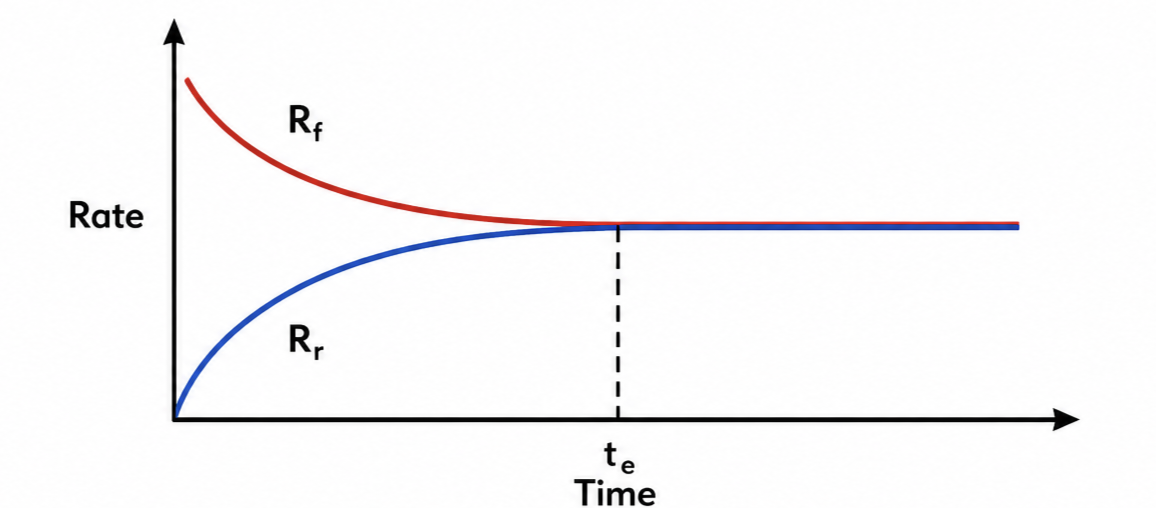
Chemical equilibrium 01Chemical equilibrium #Kc24Choose the best answerThe graph shows forward rate (Rf) and reverse rate (Rr) versus time for a reversible reaction. Which statement is correct?ABefore tₑ, Qc = KcBAt tₑ, Qc < KcCAfter tₑ, Qc = Kc and the system is at equilibriumDAfter tₑ, forward rate is greater than reverse rate Like 0 Discuss 0Share
Chemical equilibrium 01Chemical equilibrium #Reaction Progress25Choose the best answerFor H₂(g) + I₂(g) ⇌ 2HI(g), why does the concentration of HI initially increase?AThe reverse reaction is initially fasterBThe forward reaction produces HICH₂ and I₂ are formed from HIDHI is initially present in excess Like 0 Discuss 0Share